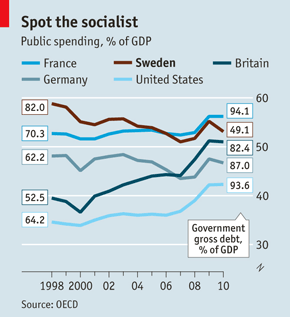
Annual growth as high as 6.4% in the first quarter. Unemployment falling fast. The budget in surplus this year. Public debt heading to below 40% of GDP. How did the Swedes do it? Luck, partly. Like Germany, Sweden is a big manufacturing exporter. In both countries GDP rebounded in 2010 after a sharp fall in 2009. Being outside the euro helped, because the krona fell before climbing back. But the main answer is the prudent pro-market policies of Fredrik Reinfeldt’s four-party centre-right coalition, which came to power in October 2006. As Mr Reinfeldt’s capable (and pony-tailed) finance minister, Anders Borg, explains, Sweden learned a lot from its banking bust in the early 1990s. Budgetary rules and bank supervision were strengthened, helping to avert the risk of another bubble. Tight fiscal policy has pushed the public sector’s share of GDP down to only just over 50% (see chart): Mr Borg has ambitions to get it below Britain’s. Without dumping the generous Swedish social model, the government has tweaked it in the direction of lower taxes and smaller welfare benefits. Mr Borg calls this “reinforcing the work ethic”. Mr Reinfeldt talks simply of making work pay. [Source]
Categories: Currents
 BONGORAMA.COM