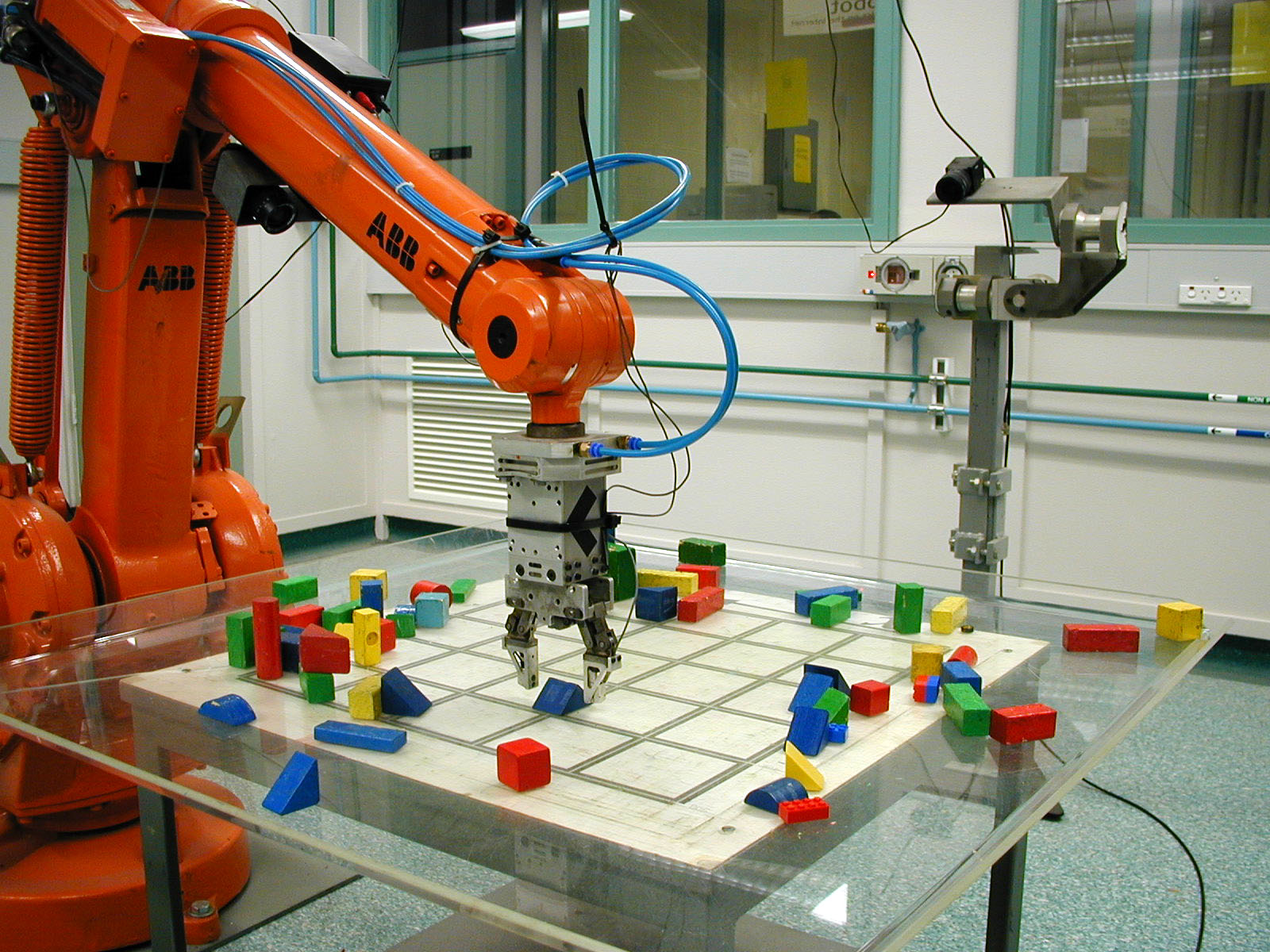
Man and machine may eventually stroll happily into the singularity-tinted sunset hand in mechanized hand. But for now, the two don’t make the best coworkers. Toiling alongside gigantic semi-intelligent machines puts workers at great risk of bodily harm. And even in the cases where humans aren’t crushed quite so easily, they still face other detrimental effects like the “increased risk of mental illness” (among other things) that warehouse employees face due to the strain of being forced to behave like machines.
Most of the solutions that engineers and researchers have begun to advance focus on improving the behavior and sensitivity of the robots. Attaching sensors to human workers could give robots a better sense of contextual awareness, for instance. And developing robust networks for robots might help them communicate with one another to better avoid the pitfalls of navigating a workspace.
Ideas like these are promising. But they rely on advances in artificial intelligence and sensor technology, which might not keep ahead of the market forces pushing robotics to the forefront of economic life. So what if we could take human workers out of the equation? Not by stripping them of their jobs, but safely ensconcing them in another part of a factory that isn’t within reaching distance of all the heavy machinery?
Read the full story on Vice here.
Categories: Science
 BONGORAMA.COM