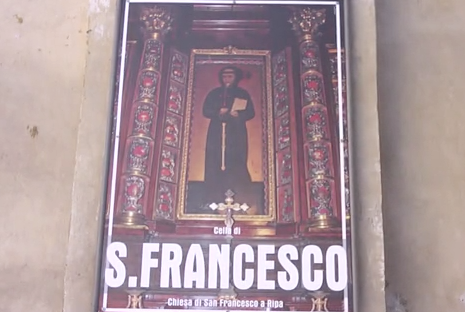
Pope Francis’ namesake, St. Francis of Assisi, founded his order of mendicant friars in the 13th century after receiving a calling from God to “rebuild my church.” Some 800 years later, St. Francis’ followers are rebuilding his church in the ancient tradition of door-to-door begging that St. Francis championed — but with a very modern twist.
With interest in things Franciscan at an all-time high, the friars who run the San Francesco a Ripa church in Rome’s Trastevere neighborhood are launching a Kickstarter online fundraising campaign this week to try to raise $125,000 for the restoration of the tiny cell where St. Francis stayed when he came to Rome to see the popes starting in 1209, The Associated Press has learned.
Genealogical research was using crowdsourcing techniques long before personal computers were common. Beginning in 1942, members of The Church of Jesus Christ of Latter-Day Saints (LDS Church) encouraged members to submit information about their ancestors. The submitted information was gathered together into a single collection. In 1969 in order to encourage more people to participate in gathering genealogical information about their ancestors, the church started the three-generation program. In this program church members were asked to prepare documented family group record forms for the first three generations. The program was later expanded to encourage members to research at least 4 generations and became known as the four-generation program.
Rather than ask for funding from the Italian government, which owns the church and is responsible for its upkeep, the friars decided on this more democratic crowd-funding initiative, thinking it more in keeping with the Franciscan tradition of seeking alms for just what they need, spreading the faith as they beg and making sure the poor are the priority.
[Source]
Categories: Collaborative Economy
 BONGORAMA.COM