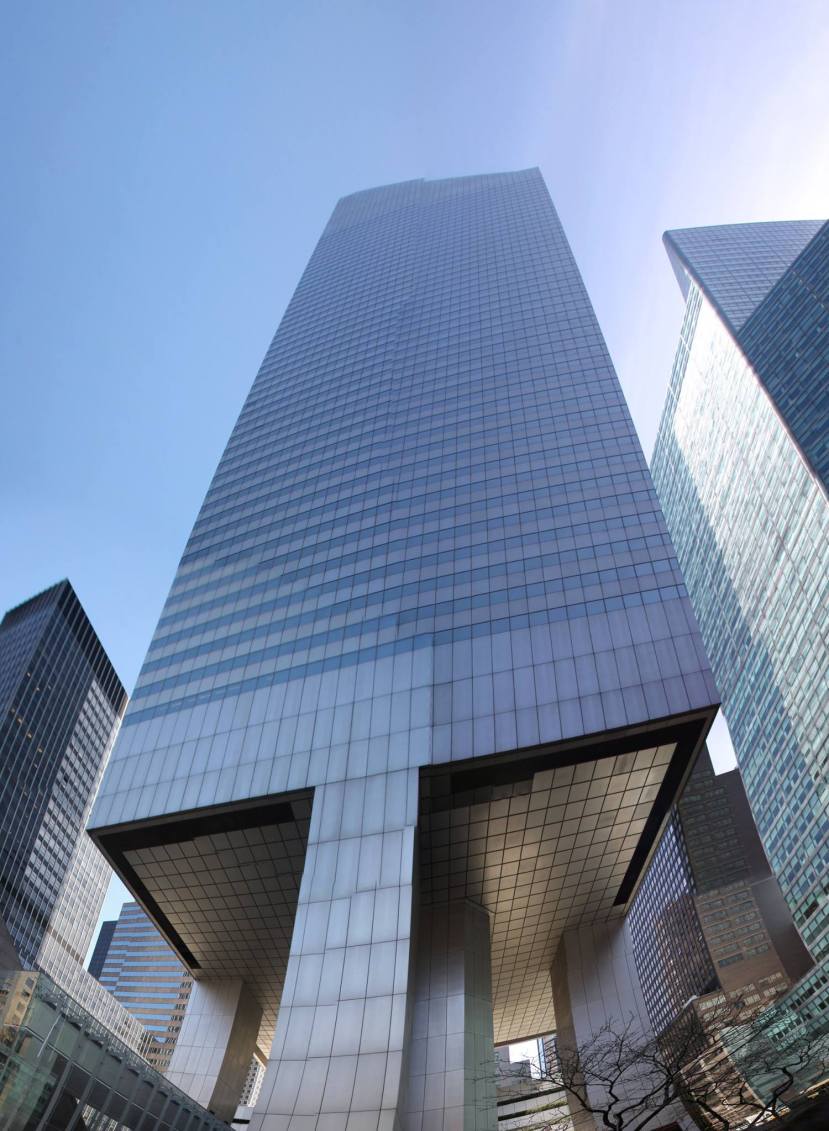
From the very beginning, the Citicorp Center (today, the Citigroup Center) in New York City was an engineering challenge. When planning for the skyscraper began in the early 1970s, the northwest corner of the proposed building site was occupied by St. Peter’s Lutheran Church. The church allowed Citicorp to build the skyscraper under one condition: a new church would have to be built on the same corner, with no connection to the Citicorp building and no columns passing through it.
How did the engineers do it? They set the 59-story tower on four massive columns, positioned at the center of each side, rather than at the corners. This design allowed the northwest corner of the building to cantilever 72 feet over the new church.
In 1978, the skyscraper’s chief structural engineer, William LeMessurier, discovered a potentially fatal flaw in the building’s design: the skyscraper’s bolted joints were too weak to withstand 70-mile-per-hour wind gusts. With hurricane season fast approaching, LeMessurier took no chances. He convinced Citicorp officers to hire a crew of welders to repair the fragile building. For the next three months, a construction crew welded two-inch-thick steel plates over each of the skyscraper’s 200 bolted joints, permanently correcting the problem.
[via Tomas Gislason]
Categories: Architecture
 BONGORAMA.COM